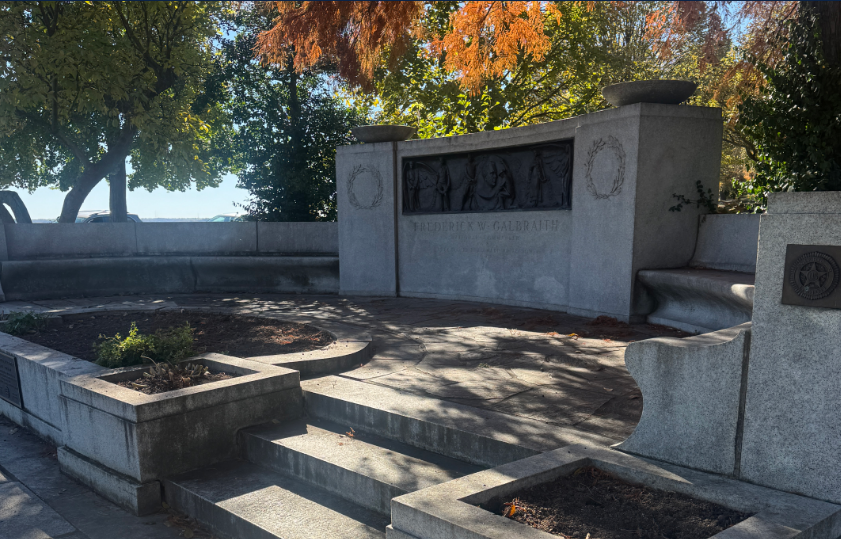
Cincinnati in the Great War
(photo by Sarah Goldstein, Xavier University)
The Queen City in Conflict
1916-1919
-
During the Confict
Like many American cities in the early 20th century, Cincinnati was home to recent immigrants, first generation citizens, and fully assimilated families from many ethnic backgrounds. Cincinnati’s German connections made the war particularly painful and neighbors often feared and profiled those with connections to that country. During the draft, hundreds of Cincinnati men were called to serve. Most of them trained at Camp Sherman near Chillicothe. Many of them did not come home. Some were buried in France. Others returned home alive to resume jobs and family life.
-
After the War
In the first decades after the war, private citizens, veterans groups, and civic organizations designed and installed memorials to Cincinnatians who served in the American Expeditionary Force in Europe and at home. Some of these monuments were in parks, and other public places. Others were on church or private property. Some were beautifully sculpted by premier artists. Others were simple, using well-known symbols of the military tradition. Some were one-of-a-kind. Others were repilcas of statues that went up all around America in the 1920s and 30s.
-
After the Next War . . .
World War II, which involved tens of thousands more Americans that the First World War and for much longer, displaced the earlier conflict in the memories of most Americans in the second half of the 20th century. Cincinnati was no exception. Some of the Queen City’s memorials fell into disrepair. Some simply fell out of memory. As people built the digital record in the early 21st century, they often couldn’t find information on these memorials. The internet is full of mistakes and gaps in information about these public treasures, as my students discovered! This site hopes to correct some of that.
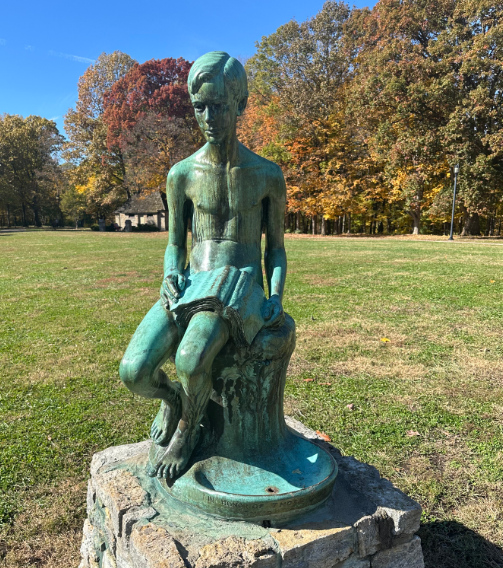
The Boy and the Book, Arthur Ivone
A committee of citizens in Mount Washington comissioned sculptor Arthur Ivone to memorialize the veterans of their neighborhood. Originally installed in 1938, the committee elected to have it moved to Stanbury Park in 1940. Unlike so many other memorials, this one has no visual reference to martical culture or military symbols, but remembers the men as the boys they were before the conflict. The base reads, “In honor of those who served their country.” Research and photo by Alexis Binkley, Xavier University.
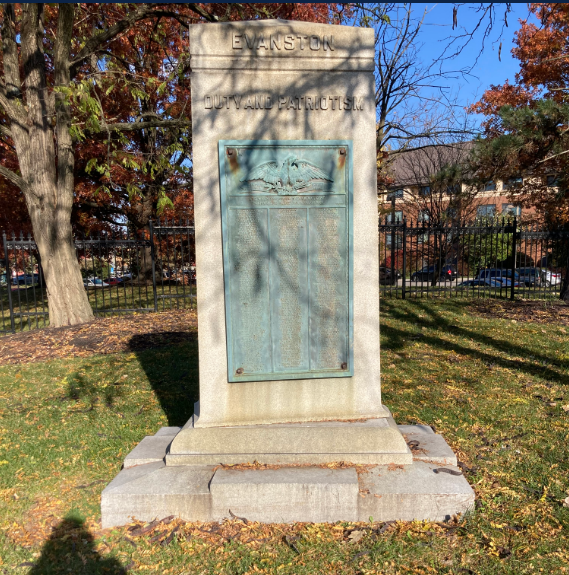
Evanston World War Honor Roll
The Evanston World War Honor Roll stands in a small patch of green space at the corner of Montgomery Road and Rutland Avenue. The monument is a stone slab with a metal plaque containing the names of 265 soldiers who served from this neighborhood. The three columns of names are topped by an eagle emblem, his head turned away from the olive branch in his right claws towards the arrows in his left, a signal that this monument memorializes war. Photo and research by Alison Horel, Xavier University.
Frederick W. Galbraith Memorial, Walnut Hills
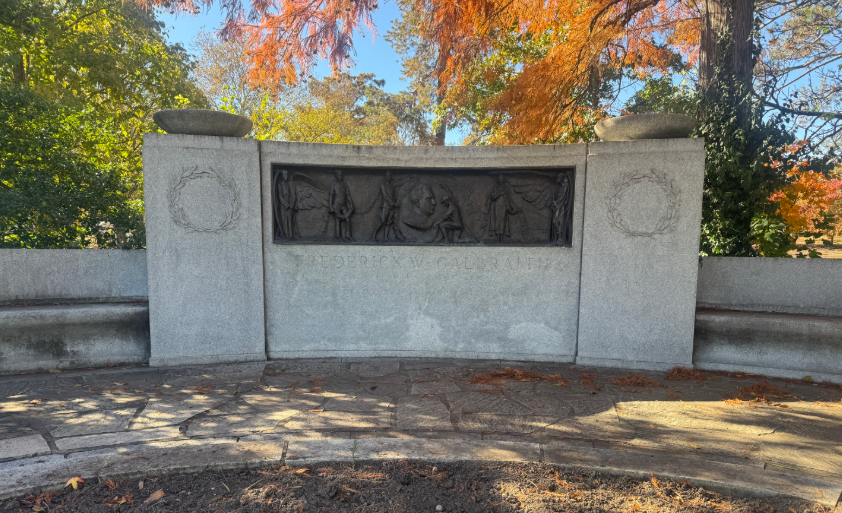
One of the biggest and most beautiful World War One monuments in Cincinnati is the Frederick W. Galbraith Memorial in Eden Park. The semi-circular stone benches and scuptures overlook the Ohio River from the highest point in the park are enhanced by bronze plaques and bas reliefs. The images not only depict Col. Galbraith, a high-ranking officer the Ohio National Guard - 147th Infantry Regiment, 37th Division - and beloved local son, but also a nurse, a soldier, a sailor, and angels. Galbraith served in the Meuse-Argonne Offensive, the longest and most deadly battle in American history, and died only a few years after the war in an automobile accident in 1921. His funeral was well-covered by the media. Unlike many other World War I monuments in Cincinnati, this one has consistently been well-maintained. Research and photo by Sarah Goldstein, Xavier University.
Cincinnati Public Library, Main Branch, Downtown
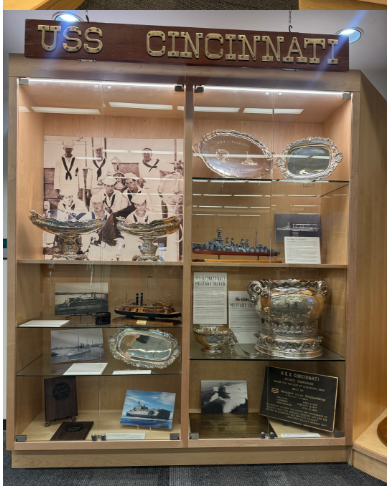
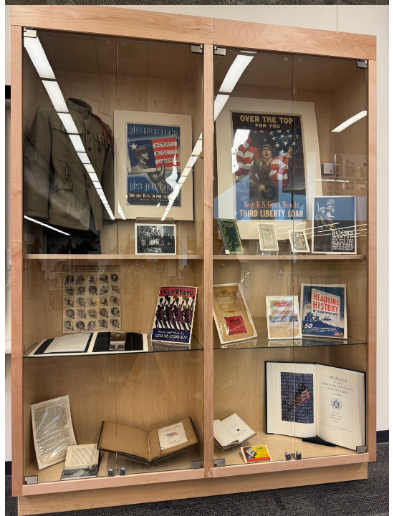
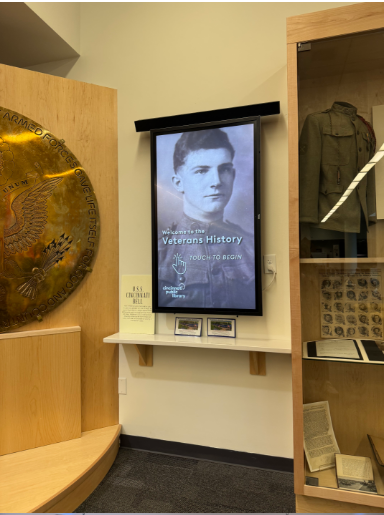
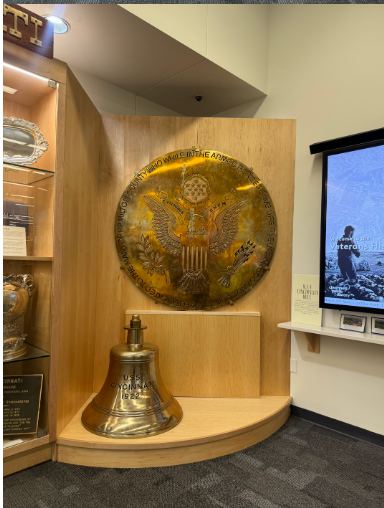
The Cincinnati Public Library is one of the oldest and largest public library systems in the United States. The Main Library downtown is one of 41 branches around the city and houses the genaeology and local history archive. During the Centennary of the First World War, the library cultivated several displays and digital collections to preserve the city’s memory of the conflict, including “Until We Meet Again: Cincinnati Portraits from World War I.” The main branch is now home to several permanent displays of artifacts and documents from local veterans including a bell from the U.S.S. Cincinnati. The memorial cases are located on the second floor. No on-line lists of memorials includes these beautiful displays. Photos by Maggie McCarron. Research by McCarron and Jinan Shehadeh.
Corporal Merrill Laws Ricketts Marine Corps Memorial, Downtown
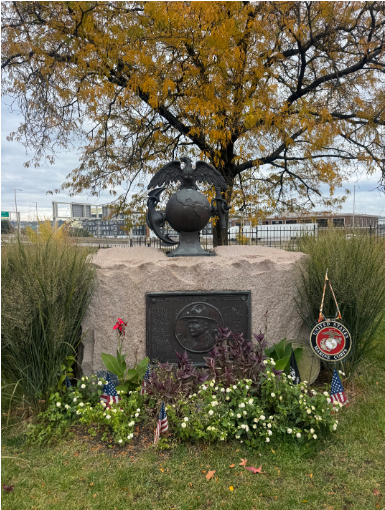
Located in Lytle Park, the Corporal Merrill Laws Ricketts Marine Corp Memorial is near a statue of Abraham Lincoln and across the street from the Taft Museum of Art. Rickett’s father promoted a monument to his son who was killed in action in 1918. The monument is a rough granite block topped by a bronze globe, anchor, and Marine Corps eagle with a matching plaque below it with a bas relief of Corporal Rickett’s face and the names of 57 local Marines. The plaque reads, “In honor of the United States Marine Corps & the Marines of Hamilton County who made the supreme sacrifice in the world war.” The installation of the monument was covered by the media at the time, sadly unlike many other local memorials. Research and photos by Lucia Martinez Lopez, Xavier University.
“Lest We Forget” World War One Marker, Pleasant Ridge
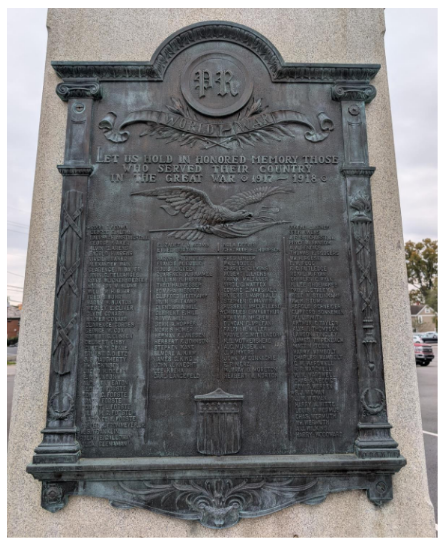
Despite its beauty, excellent upkeep, and public location, the monument, located near Pleasant Ridge Presbyterian Church, is practially a ghost in the written record. Students struggled to find any mentions of the memorial in any local paper. One article from the Cincinnati Post reports that the Pleasant Ridge Welfare Association commissioned the elegant granite slab with bronze plaque, which was dedicated during a Memorial Day parade in 1921. The plaque names 125 local service men, and contains several beautiful motifs including a bald eagle flying while clutching a flag, Greco-Roman torches and a shield icon embossed with stars and strips. The top of the plaque reads, “Let us hold in honored memory those who served their country in the Great War.” Research and photograph by Ashley Ahrens, Xavier University.
Memorial Window, Hebrew Union College Chapel, Clifton
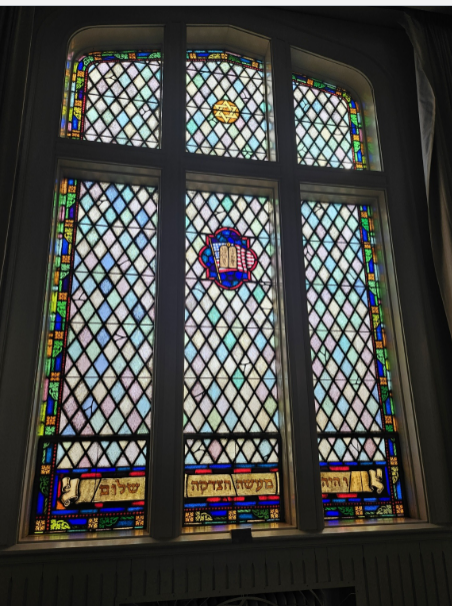
Hebrew Union Collge, founded in 1875, is one of the oldest Reform institutions of higher learning in the country, Inside Scheuer chapel is a stained-glass window dedicated in 1948 to the faculty, students, and alumni who served in World War I and II. The window is in a multi-colored lattice pattern with a Star of David near the top and an American flag icon with an image of the 2 tablets of the Ten Commandments in the center, and hebrew script along the bottom. A high number of rabbinical students at HUC suspended their studies to serve in the American Expeditionary Force. The American Jewish Archives located on the same site in Clifton has many of their papers. Their service was also widely covered by Cincinnati newspapers. Private memorials like this one rarely make it into state or nation-wide databases. Research and photograph by Samantha Cassidey, Xavier University. Special thanks to chief archivist Dr. Dana Hermann for granting access to the chapel.